
Our homes aren’t air tight. All homes leak air. In building science, the technical term for it is called air infiltration. The driving force of air infiltration is pressure. Air moves from high pressure to low pressure. The three big causes of pressure difference in a home are stack effect, wind effect , and ventilation.
Stack effect
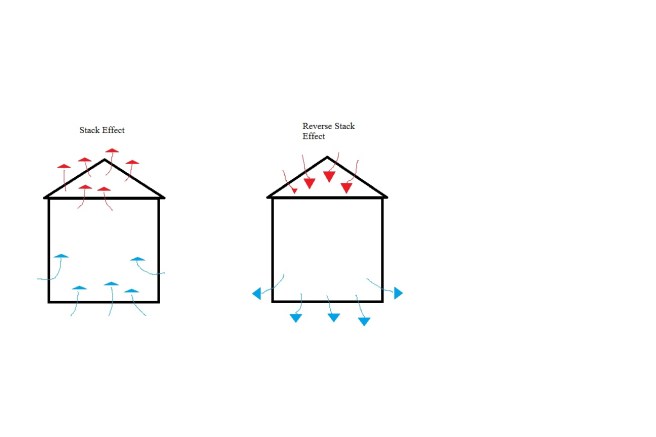
Hot air raises and cold air sinks. In winter, outside is cold and the indoors in hot. The hot raises and leaks out of penetrations and cracks. This causes a pressure difference in the house. These pressure differences in turn forces cold outside air to infiltrate the house from below. In Summer, reverse stack effect happens. Outside is very hot and the inside is very cold. The cold air moves through leaks (such as sill plates) and the hot/humid air infiltrates through the attic.
Wind Effect
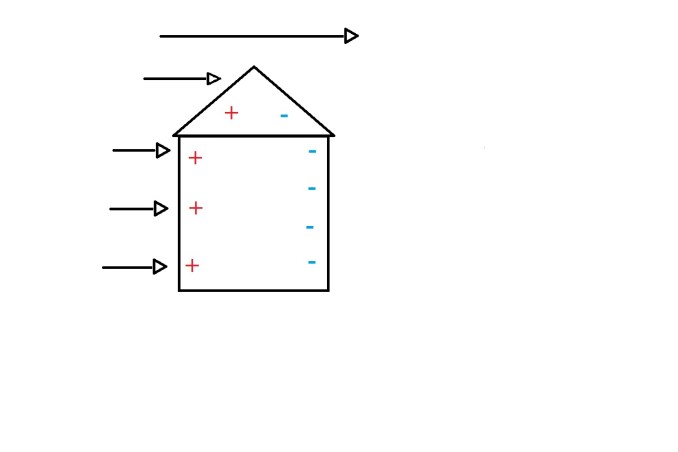
When wind hits your house it creates positive pressure on the wind facing side of the house and the negative pressure on the non-wind faces side of the house. These pressures cause infiltration on one side and exfiltration on the other.
Ventilation
Bath exhausts, kitchen exhaust, and mechanical ventilation system pull air from inside the home and exhaust them outside. These cause pressure differentials inside our homes.
Why Does it Matter?
The purpose of the air condition is to do two things: Cool and heat the home and to remove or add moisture. I live in Austin, Texas and the climate is hot and humid. It can get to 107 degrees with 83% relative humidity. Getting the moisture out of the air is the bulk of work my A/C does. If you every noticed a pvc pipe coming out of an exterior wall like seen here:
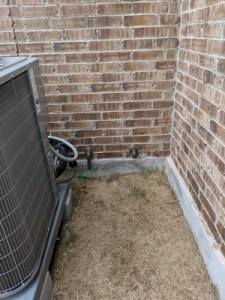
That is a condensate drain. The air conditioner is taking the humidity out of the air (conditioning it) and draining it outside. When you have air infiltration, you are getting more humid air and pollutants. Added humidity makes your air conditioner run longer, work harder, which uses more energy. By sealing air leaks, you are making so you’re only conditioning air in your house.
How Do You Measure Air Infiltration?
You measure air infiltration with a blower door test.
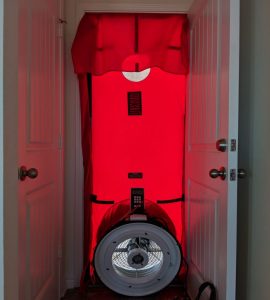
The blower door depressurizes the house at very small pressure of 50 pascals (0.007 psi) The number you get is in cubic feet per minute(CFM). Multiply the CFM by 60 and divide it by the volume of your house and you get air changes per hour. My climate zone in Austin, Texas is climate zone 2 and my maximum ACH by Texas energy code is 5. That means that the totally volume of air in my house completely changes 5 times every hour.
How Can I Minimize Air Infiltration?
Easy! You can buy a can of Great Stuff Foam insulation at lowes or home depot for $4.25. Here are some common air infiltration points:
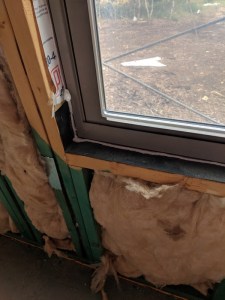
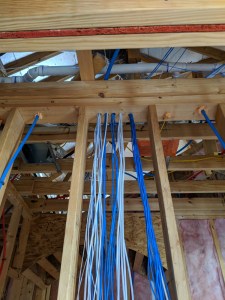
Wire Penetrations with no air sealing.
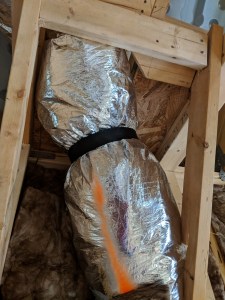
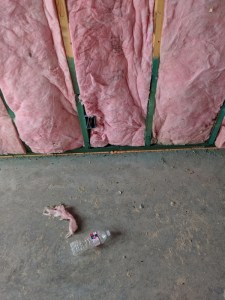
The blower door is great tool to find leaks. Just use a smoke pen and find where it is leaking. Most leaks you can use the can spray foam. Air Sealing is a great and inexpensive start to keeping pollutants and excess moisture out of your house and helps your air conditioner perform better.
 Sustainable Cents